







Extreme weather can cause a sudden loss of power. Blizzards, hurricanes or intense summer heat can cause hundreds of dollars worth of food to spoil, heating/cooling to stop working, internet connectivity to be lost, and vital medical equipment to stop working.
Using a solar generator instead of a fuel powered generator allows you to avoid storing pungent fuel in your garage, having to take a heavy engine outside in heavy rain, and being at risk of dangerous levels of CO2 entering your house. However extreme weather still places large strain on the battery, inverter and solar panels within a solar generator. It is important to know the key factors when purchasing one, to ensure that you will have a reliable source of power in freezing cold temperatures, very hot temperatures, or long periods of cloudy weather.
Operating Temperatures
All batteries struggle in extreme temperatures. Lithium-ion batteries in particular struggle in very cold temperatures and begin to degrade rapidly in high heat. Be sure to check the operating temperature range of the battery in your backup system.
Cold Temperatures:
Most Lithium Iron Phosphate (LiFePO4) power stations can operate down to approximately -20C (-4F). This means you can still run heating, lighting and communication devices in very cold temperatures. However, charging a lithium battery below 0C (32F) without internal heating protection can cause permanent damage to the cells. Consider purchasing a model with a Smart Battery Management System (BMS) in place. This should provide protection from low temperatures by either shutting down or providing internal heating.
Hot Temperatures:
During a heatwave, temperatures in garages, tents or vehicles can easily exceed 40C (104F). To combat this, look for a unit with intelligent cooling fans and overheating sensors to manage internal temperatures and avoid the inverter cutting out during use.
LiFePO4 Batteries with Good BMS Protection
During prolonged periods of bad weather, your solar generator may be frequently put under deep discharge, and rapid recharging. Old nickel cobalt manganese (NCM) batteries will likely fail in 500-800 cycles, and are at a greater risk of thermal runaway if they become damaged/overheated.
Modern survival systems use LiFePO4 (Lithium Iron Phosphate) batteries. They are stable and non-flammable in extreme situations. These batteries are designed to last for 2500-3500+ full charge cycles meaning, depending on usage, they can last for 10 years. Similarly importantly, consider models with a good Battery Management System (BMS). During extreme weather conditions, voltage spikes can occur due to unpredictable solar input and/or sudden voltage increases from devices. A quality BMS protects the device from over-voltage, short circuit, overloading, over charging, and extreme temperatures manually.
Wattage & Surge Wattage
During a power cut in extreme weather, it is important to be able to run essential items. Make a list of the essentials you want to run, along with the running watts and start-up (surge) watts needed:
- Large Fridge/Freezer: 100w – 300w running, but requires 800w – 1200w surge to start compressors.
- Medical Devices (CPAP/Oxygen Concentrator): 50w – 500w of continuous, clean power.
- Sump Pump / Space Heater: Often high inductive/resistive devices requiring 1000w – 1800w of continuous power, with high surges.
- Communication & Lighting: Wi-Fi, Laptops, Emergency Radios & LED lighting require very little power, and a mid sized battery can run many of these for many days (15w-100w).
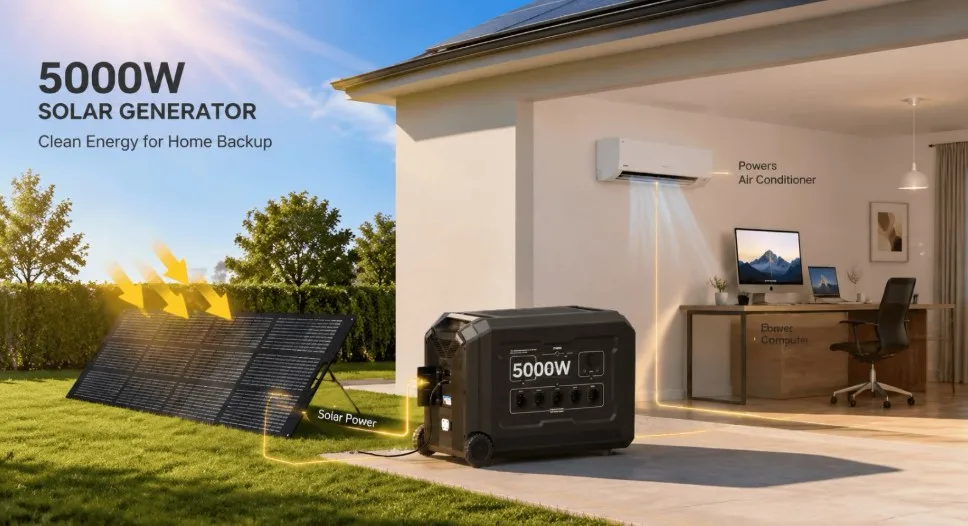
Brands like SOUOP Power offer ranges of solar generators with different capacities to match these requirements. From compact 600w and 1200w generators, perfect for outdoor emergencies and electronic survival essentials, to powerful 2400w, 3600w and 5000w+ to run high surge devices without tripping in homes.
Uninterrupted Power Supply (UPS) Feature
During extreme storms, and strong winds, there may be sudden power fluctuations. This can cause desktop computers, medical equipment and external drives to malfunction.
If using it as a primary back up supply in your home, look for models with EPS (Emergency Power Supply)/UPS (uninterrupted power supply) functionality. With a standard wall connection during fair weather, the device simply passes power from the grid to the device. However, during a storm causing a power cut, the device will seamlessly switch to battery power (often in less than 10-20ms), so sensitive devices won’t experience any interruptions.
Fast Charging & Poor Light Performance
Although a large capacity battery is important for surviving without grid power, during prolonged periods of bad weather (such as 5 days of snow/hurricane) it is important to be able to recharge the battery quickly between patches of good weather.
High Charging Power: Entry level models often have a maximum solar charging capacity of 100w-200w. Therefore, a large 2000wh battery may take over 12 hours of direct sun to fully recharge. To greatly increase charging speed during brief periods of good weather, choose a model with a high voltage MPPT (Maximum Power Point Tracking) charger. These can allow for 800w – 2100w of solar input. Therefore, even just 2-3 hours of sun can allow for a large amount of energy to be stored.
Durable Solar Panels: As solar panels are placed outside in the weather, look for monocrystalline panels with at least IP65/IP67 rating to protect from water and dirt. Additionally, to prevent being blown across the garden in windy weather, look for panels with durable legs or holes (grommets).
Multiple Charging Options: During long periods of heavy cloud cover, having multiple charging options can be very useful. Having the ability to charge from the 12v socket in a running vehicle, alternator charging, or briefly from generators/grids means that you aren’t limited to one form of charging.
Durable Design, Easy Portability and Good Ports
During an emergency you may need to move your power source from one room to another, or even load it into the back of an SUV. Depending on the size of the battery (2000wh-5000wh), this can weigh between 45lbs and over 100lbs.
To make moving the device easier, look for ergonomic, non-slip handles, or heavy duty wheels, and extendable handles on larger units. The materials used in construction should be flame resistant (ABS+PC) with sealed ports to protect the electronics from dust, splash damage, and rough handling in poor lighting. Internal LED strips with s.o.s function are surprisingly useful for finding items in dark cupboards, or drawing attention in an emergency on the roadside.
Capacity (Wh) and Run Time
Battery capacity in solar generators are measured in Wh. To calculate an approximate run time for a device, multiply the capacity (wh) by 0.85 (to account for standard inverter losses) then divide by the wattage of the device.
Therefore, a 2232wh generator running a 150w fridge would give approximately 12.6 hours of continuous operation. However, as fridges do not run continuously, but cycle, the run time can often be increased to 20-24 hours. For areas with long periods of snow (winter) or loss of grid power (summer), it is advisable to purchase a generator with a slightly larger capacity.
Maintenance Tips
Best solar generators are very durable, it is important to perform minimal maintenance before severe weather. Ensure the device is stored in a dry indoor location, avoiding direct sunlight and damp floors in basements. If left unused for long periods of time (months), check the screen every 3-6 months. Ensure that the battery has a charge between 50-80%. If a large storm is expected, charge fully (100%).
Checking the connections, cleaning the solar panels, and ensuring the battery fully charges (takes 10 mins twice per year) will give you peace of mind. During windy weather, and loss of lights in the area, you can simply press a button to have silent and reliable power!